Whole-Home Generator Installation: Staying Powered Through Storm Season
When hurricane season arrives in New Orleans, the question isn’t if the power will go out—it’s when. A whole-home generator keeps your lights on, refrigerator running, and AC functioning during extended outages. Unlike portable generators, standby generators activate automatically and connect safely to your home’s electrical system through a transfer switch, eliminating the risks of manual setup, extension cords, and dangerous backfeeding.
WHY WHOLE-HOME GENERATORS MATTER FOR NEW ORLEANS HOMEOWNERS
A whole-home generator provides automatic backup power when the utility grid fails, making it essential for families and businesses in storm-prone areas. In New Orleans, where hurricanes, tropical storms, and severe thunderstorms can knock out power for days or weeks, a standby generator isn’t a luxury—it’s practical protection.
During an outage, your home loses refrigeration, climate control, lighting, and medical equipment operation. For elderly residents, families with young children, or anyone dependent on powered medical devices, a sudden loss of power creates real hardship. A whole-home generator restores normal living conditions within seconds of an outage, without any action from you. That peace of mind carries genuine value, especially when storm season is underway.
Preparation matters. Installing a generator before storm season keeps your family safe and comfortable when hurricanes strike.
PORTABLE VS. STANDBY GENERATORS: WHICH IS RIGHT FOR YOUR HOME?
Portable generators cost less upfront and offer flexibility if you move or need occasional backup power. They sit outside, connect via extension cords to specific appliances, and require you to start them manually during an outage. However, they’re louder, produce exhaust, need fuel storage and management, and can’t power your entire home safely.
Standby generators install permanently and connect to your electrical panel through a transfer switch. They run on natural gas or propane, activate automatically within seconds, and require no manual operation. Higher upfront cost and professional installation by a licensed electrician are the main tradeoffs, but reliability during emergencies makes them worth the investment.
For New Orleans storm season, a standby generator offers superior reliability. When a hurricane arrives at 2 AM, you want your generator running automatically—not discovering you’re out of fuel and trying to find a hardware store during an emergency.
THE TRANSFER SWITCH: YOUR HOME’S ELECTRICAL SAFETY GUARDIAN
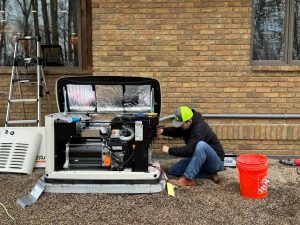 The transfer switch is the critical safety component that sits between your utility line and electrical panel. It automatically detects power failure and switches your home to generator power within 2-10 seconds, seamlessly keeping your systems running.
Critically, the transfer switch prevents backfeeding—a dangerous condition where generator power flows backward into utility lines. This kills utility workers and damages neighboring homes. A properly installed transfer switch eliminates this risk entirely. This is why only a licensed electrician should install it—the stakes are literally a matter of life and death.
SIZING YOUR GENERATOR: RUNNING EVERYTHING YOU NEED
Generator size matters—too small won’t work, too large wastes money. A licensed electrician performs a load calculation, adding up the wattage of critical circuits and appliances you need.
Essentials typically include the refrigerator, air conditioning, heating, water heater, and lighting. A typical household needs 5,000-7,500 watts for these basics. If you want everything powered simultaneously, budget 10,000 watts or higher. Your Electrician sizes your generator to match your specific home’s requirements.
FUEL OPTIONS: NATURAL GAS VS. PROPANE
Most whole-home generators run on natural gas or propane. Natural gas connects to your existing line, offering unlimited fuel and no manual refueling. Propane uses an on-property tank, remains available if gas lines fail, but requires monitoring and refills. Most New Orleans homes choose natural gas for convenience. Your electrician can recommend which fits your home best.
PROFESSIONAL INSTALLATION AND PERMITS: WHY THIS WORK REQUIRES A LICENSE
Installing a whole-home generator isn’t a DIY project. It requires natural gas or propane connections, 240-volt circuits, and transfer switch programming. One mistake creates fire hazards and electrocution risks.
Louisiana law requires licensed electricians to install generators. Your electrician pulls permits, ensuring local inspectors verify the installation meets code. Permitting also notifies your utility company, preventing backfeeding accidents and ensuring safety during maintenance.
THE DANGER OF IMPROPER DIY HOOKUPS AND BACKFEEDING
Never connect a portable generator to your home’s electrical panel using an extension cord or makeshift connection. This creates backfeeding—generator power flowing backward into utility lines. Utility workers touching those lines get electrocuted. Neighbors’ homes receive dangerously high voltage and burn out equipment.
Backfeeding has killed utility workers. It’s also illegal in New Orleans and throughout Louisiana. The legal and safety stakes are both severe.
A properly installed transfer switch, installed by a licensed electrician, prevents backfeeding entirely. This is the core reason professional installation is essential—not optional.
STAY PREPARED FOR STORM SEASON
New Orleans storm season tests every home’s preparedness. A whole-home generator removes power failure from that equation, keeping your family comfortable and safe when the grid goes down.
Contact MK Electric Man to discuss generator installation, sizing, and fuel options for your New Orleans home. Our licensed electricians handle every aspect—from load calculations to permits to safe installation and testing. Visit www.neworleanselectricians.com to schedule a consultation and ensure your home stays powered through storm season.